

See how knowledge connects.

Follow any subject from Foundation to Year 12, in your state or territory.

EdDots Learning Map

See how to read the map
Year levels

Each learning area is listed with its Year 11 and 12 subjects, such as Physics under Science. The subject buttons below change the subject too.

Subject ladder

How to read this map

Connect the dots in your learning.

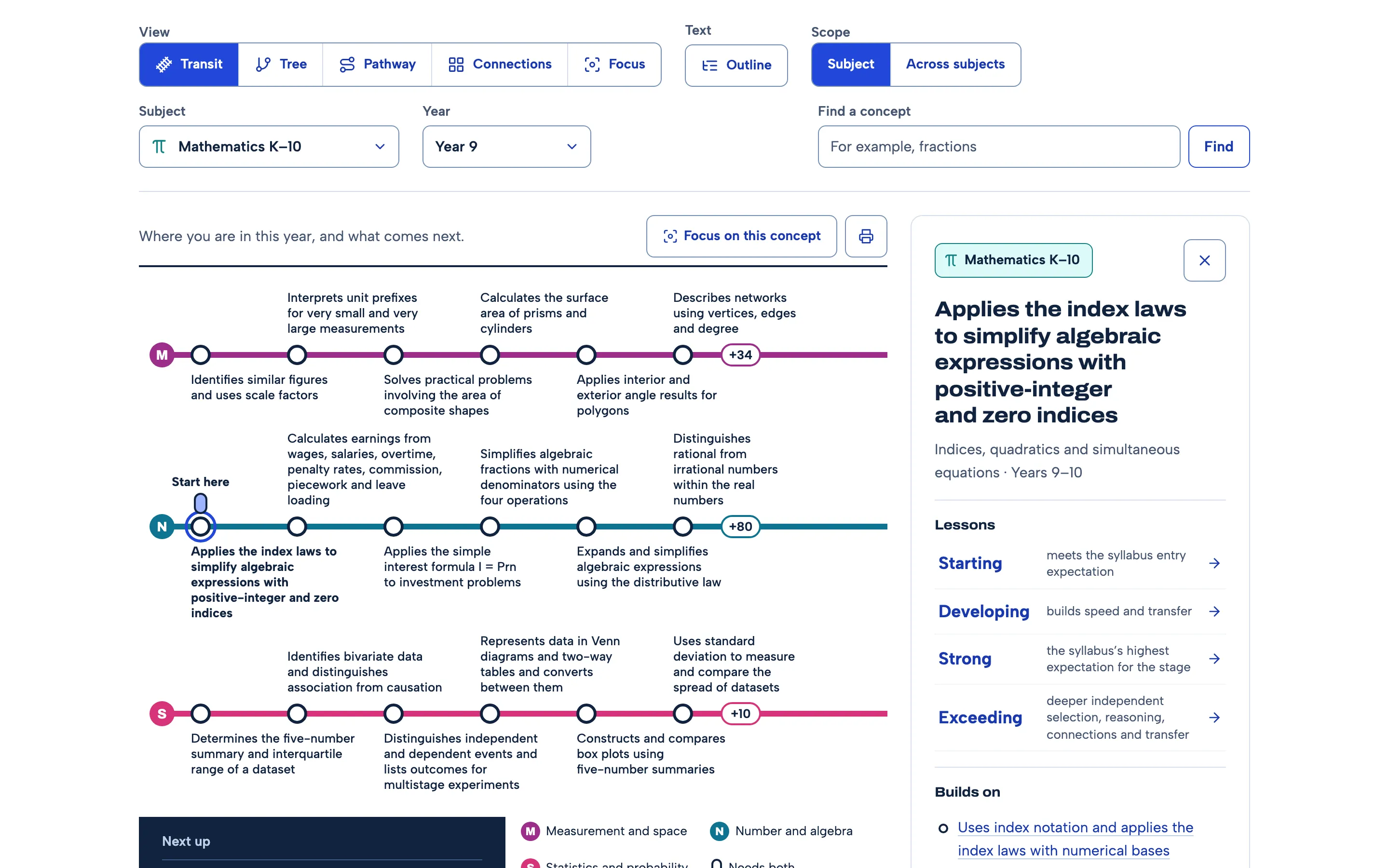
The Learning Map is the spine of your learning. Follow this example to see how to read it, then try the map above.

Example: Year 9 Mathematics · Transit view

Explore the Learning MapExample view

Choose a view above, or read the steps below.

Choose where to begin.

Choose a subject and year, or search for a concept. The map shows the ideas in that part of your learning.

Read the dots and lines.

Each dot is a concept. Coloured lines group related ideas into strands. Select a dot to open its details.

Follow the learning.

See what an idea builds on and where it leads. When lessons are available, choose a level to continue learning.

Try the map ↑

Lessons in English K–10, Year 5

Open a lesson to see its parts and levels. Select Study this concept to continue with a learning subscription.

English K–10 · Year 5

71 lessons in this selection

Reading comprehensionReading and viewing

Choose a lesson to see its structure.

Explains why an author structured a text the way they didStructure
  1. Introduction
  2. Prerequisite review
  3. The idea
  4. Worked examples
  5. Practice set
  6. Common errors
  7. Extension
  • StartingLearning subscription
  • DevelopingLearning subscription
  • StrongLearning subscription
  • ExceedingLearning subscription
Study this concept
Follows the ties that hold a text togetherStructure
  1. Introduction
  2. Prerequisite review
  3. The idea
  4. Worked examples
  5. Practice set
  6. Common errors
  7. Extension
  • StartingLearning subscription
  • DevelopingLearning subscription
  • StrongLearning subscription
  • ExceedingLearning subscription
Study this concept
Compares and synthesises texts on the same topicStructure
  1. Introduction
  2. Prerequisite review
  3. The idea
  4. Worked examples
  5. Practice set
  6. Common errors
  7. Extension
  • StartingLearning subscription
  • DevelopingLearning subscription
  • StrongLearning subscription
  • ExceedingLearning subscription
Study this concept
Distinguishes fact from opinion, identifies bias and questions the authorStructure
  1. Introduction
  2. Prerequisite review
  3. The idea
  4. Worked examples
  5. Practice set
  6. Common errors
  7. Extension
  • StartingLearning subscription
  • DevelopingLearning subscription
  • StrongLearning subscription
  • ExceedingLearning subscription
Study this concept
Reads accurately and matches rate and prosody to the textStructure
  1. Introduction
  2. Prerequisite review
  3. The idea
  4. Worked examples
  5. Practice set
  6. Common errors
  7. Extension
  • StartingLearning subscription
  • DevelopingLearning subscription
  • StrongLearning subscription
  • ExceedingLearning subscription
Study this concept
Supports inferences with evidence from the textStructure
  1. Introduction
  2. Prerequisite review
  3. The idea
  4. Worked examples
  5. Practice set
  6. Common errors
  7. Extension
  • StartingLearning subscription
  • DevelopingLearning subscription
  • StrongLearning subscription
  • ExceedingLearning subscription
Study this concept
Explains how language choices shape a reader's responseStructure
  1. Introduction
  2. Prerequisite review
  3. The idea
  4. Worked examples
  5. Practice set
  6. Common errors
  7. Extension
  • StartingLearning subscription
  • DevelopingLearning subscription
  • StrongLearning subscription
  • ExceedingLearning subscription
Study this concept
Monitors, repairs and evaluates own comprehension strategiesStructure
  1. Introduction
  2. Prerequisite review
  3. The idea
  4. Worked examples
  5. Practice set
  6. Common errors
  7. Extension
  • StartingLearning subscription
  • DevelopingLearning subscription
  • StrongLearning subscription
  • ExceedingLearning subscription
Study this concept
Uses signposts and structure to find information fastStructure
  1. Introduction
  2. Prerequisite review
  3. The idea
  4. Worked examples
  5. Practice set
  6. Common errors
  7. Extension
  • StartingLearning subscription
  • DevelopingLearning subscription
  • StrongLearning subscription
  • ExceedingLearning subscription
Study this concept
Chooses texts and reading approaches for a purposeStructure
  1. Introduction
  2. Prerequisite review
  3. The idea
  4. Worked examples
  5. Practice set
  6. Common errors
  7. Extension
  • StartingLearning subscription
  • DevelopingLearning subscription
  • StrongLearning subscription
  • ExceedingLearning subscription
Study this concept
Gathers research and judges the reliability of sourcesStructure
  1. Introduction
  2. Prerequisite review
  3. The idea
  4. Worked examples
  5. Practice set
  6. Common errors
  7. Extension
  • StartingLearning subscription
  • DevelopingLearning subscription
  • StrongLearning subscription
  • ExceedingLearning subscription
Study this concept
Summarises and organises the main ideas of a textStructure
  1. Introduction
  2. Prerequisite review
  3. The idea
  4. Worked examples
  5. Practice set
  6. Common errors
  7. Extension
  • StartingLearning subscription
  • DevelopingLearning subscription
  • StrongLearning subscription
  • ExceedingLearning subscription
Study this concept
Uses morphology and etymology to unlock unfamiliar wordsStructure
  1. Introduction
  2. Prerequisite review
  3. The idea
  4. Worked examples
  5. Practice set
  6. Common errors
  7. Extension
  • StartingLearning subscription
  • DevelopingLearning subscription
  • StrongLearning subscription
  • ExceedingLearning subscription
Study this concept
Link to this topic
Understanding and responding to literatureReading and viewing

Choose a lesson to see its structure.

Judges argument, objectivity and the authority of textsStructure
  1. Introduction
  2. Prerequisite review
  3. The idea
  4. Worked examples
  5. Practice set
  6. Common errors
  7. Extension
  • StartingLearning subscription
  • DevelopingLearning subscription
  • StrongLearning subscription
  • ExceedingLearning subscription
Study this concept
Analyses character attributes, archetypes and developmentStructure
  1. Introduction
  2. Prerequisite review
  3. The idea
  4. Worked examples
  5. Practice set
  6. Common errors
  7. Extension
  • StartingLearning subscription
  • DevelopingLearning subscription
  • StrongLearning subscription
  • ExceedingLearning subscription
Study this concept
Explains genre codes and the texts that break themStructure
  1. Introduction
  2. Prerequisite review
  3. The idea
  4. Worked examples
  5. Practice set
  6. Common errors
  7. Extension
  • StartingLearning subscription
  • DevelopingLearning subscription
  • StrongLearning subscription
  • ExceedingLearning subscription
Study this concept
Analyses figurative language, symbol and imagery in literatureStructure
  1. Introduction
  2. Prerequisite review
  3. The idea
  4. Worked examples
  5. Practice set
  6. Common errors
  7. Extension
  • StartingLearning subscription
  • DevelopingLearning subscription
  • StrongLearning subscription
  • ExceedingLearning subscription
Study this concept
Analyses narrative conventions and the expectations they setStructure
  1. Introduction
  2. Prerequisite review
  3. The idea
  4. Worked examples
  5. Practice set
  6. Common errors
  7. Extension
  • StartingLearning subscription
  • DevelopingLearning subscription
  • StrongLearning subscription
  • ExceedingLearning subscription
Study this concept
Explains how perspective is shaped by context and authorial choiceStructure
  1. Introduction
  2. Prerequisite review
  3. The idea
  4. Worked examples
  5. Practice set
  6. Common errors
  7. Extension
  • StartingLearning subscription
  • DevelopingLearning subscription
  • StrongLearning subscription
  • ExceedingLearning subscription
Study this concept
Identifies the recurring messages in literatureStructure
  1. Introduction
  2. Prerequisite review
  3. The idea
  4. Worked examples
  5. Practice set
  6. Common errors
  7. Extension
  • StartingLearning subscription
  • DevelopingLearning subscription
  • StrongLearning subscription
  • ExceedingLearning subscription
Study this concept
Link to this topic
VocabularyReading and viewing

Choose a lesson to see its structure.

Works out non-literal meanings: idiom and metaphorStructure
  1. Introduction
  2. Prerequisite review
  3. The idea
  4. Worked examples
  5. Practice set
  6. Common errors
  7. Extension
  • StartingLearning subscription
  • DevelopingLearning subscription
  • StrongLearning subscription
  • ExceedingLearning subscription
Study this concept
Analyses morphemes to unlock subject-specific wordsStructure
  1. Introduction
  2. Prerequisite review
  3. The idea
  4. Worked examples
  5. Practice set
  6. Common errors
  7. Extension
  • StartingLearning subscription
  • DevelopingLearning subscription
  • StrongLearning subscription
  • ExceedingLearning subscription
Study this concept
Tells informative words from emotive, persuasive onesStructure
  1. Introduction
  2. Prerequisite review
  3. The idea
  4. Worked examples
  5. Practice set
  6. Common errors
  7. Extension
  • StartingLearning subscription
  • DevelopingLearning subscription
  • StrongLearning subscription
  • ExceedingLearning subscription
Study this concept
Collects and uses newly met words, including metalanguageStructure
  1. Introduction
  2. Prerequisite review
  3. The idea
  4. Worked examples
  5. Practice set
  6. Common errors
  7. Extension
  • StartingLearning subscription
  • DevelopingLearning subscription
  • StrongLearning subscription
  • ExceedingLearning subscription
Study this concept
Identifies where words come fromStructure
  1. Introduction
  2. Prerequisite review
  3. The idea
  4. Worked examples
  5. Practice set
  6. Common errors
  7. Extension
  • StartingLearning subscription
  • DevelopingLearning subscription
  • StrongLearning subscription
  • ExceedingLearning subscription
Study this concept
Weighs modality and shades of meaning between synonymsStructure
  1. Introduction
  2. Prerequisite review
  3. The idea
  4. Worked examples
  5. Practice set
  6. Common errors
  7. Extension
  • StartingLearning subscription
  • DevelopingLearning subscription
  • StrongLearning subscription
  • ExceedingLearning subscription
Study this concept
Link to this topic
Handwriting and digital transcriptionWriting and representing

Choose a lesson to see its structure.

Types efficiently and selects digital tools to suit audience and purposeStructure
  1. Introduction
  2. Prerequisite review
  3. The idea
  4. Worked examples
  5. Practice set
  6. Common errors
  7. Extension
  • StartingLearning subscription
  • DevelopingLearning subscription
  • StrongLearning subscription
  • ExceedingLearning subscription
Study this concept
Sustains a legible personal handwriting style and adjusts it to purposeStructure
  1. Introduction
  2. Prerequisite review
  3. The idea
  4. Worked examples
  5. Practice set
  6. Common errors
  7. Extension
  • StartingLearning subscription
  • DevelopingLearning subscription
  • StrongLearning subscription
  • ExceedingLearning subscription
Study this concept
Link to this topic
Sentence-level grammar and punctuationWriting and representing

Choose a lesson to see its structure.

Uses appositives and nominalisation to write succinctly and authoritativelyStructure
  1. Introduction
  2. Prerequisite review
  3. The idea
  4. Worked examples
  5. Practice set
  6. Common errors
  7. Extension
  • StartingLearning subscription
  • DevelopingLearning subscription
  • StrongLearning subscription
  • ExceedingLearning subscription
Study this concept
Embeds adjectival clauses and repositions adverbial clauses for effectStructure
  1. Introduction
  2. Prerequisite review
  3. The idea
  4. Worked examples
  5. Practice set
  6. Common errors
  7. Extension
  • StartingLearning subscription
  • DevelopingLearning subscription
  • StrongLearning subscription
  • ExceedingLearning subscription
Study this concept
Uses parentheses, dashes and hyphens, and experiments with punctuation for effectStructure
  1. Introduction
  2. Prerequisite review
  3. The idea
  4. Worked examples
  5. Practice set
  6. Common errors
  7. Extension
  • StartingLearning subscription
  • DevelopingLearning subscription
  • StrongLearning subscription
  • ExceedingLearning subscription
Study this concept
Uses capitals, commas and quotation marks consistently across a textStructure
  1. Introduction
  2. Prerequisite review
  3. The idea
  4. Worked examples
  5. Practice set
  6. Common errors
  7. Extension
  • StartingLearning subscription
  • DevelopingLearning subscription
  • StrongLearning subscription
  • ExceedingLearning subscription
Study this concept
Varies sentence type and length for clarity and effect suited to text purposeStructure
  1. Introduction
  2. Prerequisite review
  3. The idea
  4. Worked examples
  5. Practice set
  6. Common errors
  7. Extension
  • StartingLearning subscription
  • DevelopingLearning subscription
  • StrongLearning subscription
  • ExceedingLearning subscription
Study this concept
Chooses verbs and verb groups for precision and added detailStructure
  1. Introduction
  2. Prerequisite review
  3. The idea
  4. Worked examples
  5. Practice set
  6. Common errors
  7. Extension
  • StartingLearning subscription
  • DevelopingLearning subscription
  • StrongLearning subscription
  • ExceedingLearning subscription
Study this concept
Uses Tier 2 and Tier 3 vocabulary, synonyms and modality with controlStructure
  1. Introduction
  2. Prerequisite review
  3. The idea
  4. Worked examples
  5. Practice set
  6. Common errors
  7. Extension
  • StartingLearning subscription
  • DevelopingLearning subscription
  • StrongLearning subscription
  • ExceedingLearning subscription
Study this concept
Link to this topic
SpellingWriting and representing

Choose a lesson to see its structure.

Explains graphemes and roots by their etymology when spellingStructure
  1. Introduction
  2. Prerequisite review
  3. The idea
  4. Worked examples
  5. Practice set
  6. Common errors
  7. Extension
  • StartingLearning subscription
  • DevelopingLearning subscription
  • StrongLearning subscription
  • ExceedingLearning subscription
Study this concept
Adds derivational suffixes and assimilated prefixes to base words and rootsStructure
  1. Introduction
  2. Prerequisite review
  3. The idea
  4. Worked examples
  5. Practice set
  6. Common errors
  7. Extension
  • StartingLearning subscription
  • DevelopingLearning subscription
  • StrongLearning subscription
  • ExceedingLearning subscription
Study this concept
Proofreads for misspellings and spells taught homophones across learning areasStructure
  1. Introduction
  2. Prerequisite review
  3. The idea
  4. Worked examples
  5. Practice set
  6. Common errors
  7. Extension
  • StartingLearning subscription
  • DevelopingLearning subscription
  • StrongLearning subscription
  • ExceedingLearning subscription
Study this concept
Segments unfamiliar multisyllabic words and applies infrequent graphemesStructure
  1. Introduction
  2. Prerequisite review
  3. The idea
  4. Worked examples
  5. Practice set
  6. Common errors
  7. Extension
  • StartingLearning subscription
  • DevelopingLearning subscription
  • StrongLearning subscription
  • ExceedingLearning subscription
Study this concept
Link to this topic
Text features, cohesion and planningWriting and representing

Choose a lesson to see its structure.

Controls tense, referencing, substitution and paragraph transitions across a whole textStructure
  1. Introduction
  2. Prerequisite review
  3. The idea
  4. Worked examples
  5. Practice set
  6. Common errors
  7. Extension
  • StartingLearning subscription
  • DevelopingLearning subscription
  • StrongLearning subscription
  • ExceedingLearning subscription
Study this concept
Assesses the reliability and authority of sources when researchingStructure
  1. Introduction
  2. Prerequisite review
  3. The idea
  4. Worked examples
  5. Practice set
  6. Common errors
  7. Extension
  • StartingLearning subscription
  • DevelopingLearning subscription
  • StrongLearning subscription
  • ExceedingLearning subscription
Study this concept
Uses metaphor, hyperbole, oxymoron and allusion for effectStructure
  1. Introduction
  2. Prerequisite review
  3. The idea
  4. Worked examples
  5. Practice set
  6. Common errors
  7. Extension
  • StartingLearning subscription
  • DevelopingLearning subscription
  • StrongLearning subscription
  • ExceedingLearning subscription
Study this concept
Plans hybrid texts and researches from several sources using print or digital toolsStructure
  1. Introduction
  2. Prerequisite review
  3. The idea
  4. Worked examples
  5. Practice set
  6. Common errors
  7. Extension
  • StartingLearning subscription
  • DevelopingLearning subscription
  • StrongLearning subscription
  • ExceedingLearning subscription
Study this concept
Chooses multimodal features for an audience and acknowledges sourcesStructure
  1. Introduction
  2. Prerequisite review
  3. The idea
  4. Worked examples
  5. Practice set
  6. Common errors
  7. Extension
  • StartingLearning subscription
  • DevelopingLearning subscription
  • StrongLearning subscription
  • ExceedingLearning subscription
Study this concept
Justifies authorial decisions and edits own and others' writing against criteriaStructure
  1. Introduction
  2. Prerequisite review
  3. The idea
  4. Worked examples
  5. Practice set
  6. Common errors
  7. Extension
  • StartingLearning subscription
  • DevelopingLearning subscription
  • StrongLearning subscription
  • ExceedingLearning subscription
Study this concept
Link to this topic
Writing for different purposesWriting and representing

Choose a lesson to see its structure.

Builds a statement of position and logical lines of argument to a rhetorical conclusionStructure
  1. Introduction
  2. Prerequisite review
  3. The idea
  4. Worked examples
  5. Practice set
  6. Common errors
  7. Extension
  • StartingLearning subscription
  • DevelopingLearning subscription
  • StrongLearning subscription
  • ExceedingLearning subscription
Study this concept
Compares, contrasts and discusses cause and effect across sequenced paragraphsStructure
  1. Introduction
  2. Prerequisite review
  3. The idea
  4. Worked examples
  5. Practice set
  6. Common errors
  7. Extension
  • StartingLearning subscription
  • DevelopingLearning subscription
  • StrongLearning subscription
  • ExceedingLearning subscription
Study this concept
Writes factual and historical accounts that include broader contextual informationStructure
  1. Introduction
  2. Prerequisite review
  3. The idea
  4. Worked examples
  5. Practice set
  6. Common errors
  7. Extension
  • StartingLearning subscription
  • DevelopingLearning subscription
  • StrongLearning subscription
  • ExceedingLearning subscription
Study this concept
Crafts imaginative texts with deliberate choices of setting, character, voice and themeStructure
  1. Introduction
  2. Prerequisite review
  3. The idea
  4. Worked examples
  5. Practice set
  6. Common errors
  7. Extension
  • StartingLearning subscription
  • DevelopingLearning subscription
  • StrongLearning subscription
  • ExceedingLearning subscription
Study this concept
Chooses informative formats and organises ideas into logically sequenced paragraphsStructure
  1. Introduction
  2. Prerequisite review
  3. The idea
  4. Worked examples
  5. Practice set
  6. Common errors
  7. Extension
  • StartingLearning subscription
  • DevelopingLearning subscription
  • StrongLearning subscription
  • ExceedingLearning subscription
Study this concept
Writes objective arguments, blends them with personal ones, and presents multiple viewpointsStructure
  1. Introduction
  2. Prerequisite review
  3. The idea
  4. Worked examples
  5. Practice set
  6. Common errors
  7. Extension
  • StartingLearning subscription
  • DevelopingLearning subscription
  • StrongLearning subscription
  • ExceedingLearning subscription
Study this concept
Selects poetic forms to express ideas descriptivelyStructure
  1. Introduction
  2. Prerequisite review
  3. The idea
  4. Worked examples
  5. Practice set
  6. Common errors
  7. Extension
  • StartingLearning subscription
  • DevelopingLearning subscription
  • StrongLearning subscription
  • ExceedingLearning subscription
Study this concept
Targets rhetorical devices and modality to qualify or strengthen argumentsStructure
  1. Introduction
  2. Prerequisite review
  3. The idea
  4. Worked examples
  5. Practice set
  6. Common errors
  7. Extension
  • StartingLearning subscription
  • DevelopingLearning subscription
  • StrongLearning subscription
  • ExceedingLearning subscription
Study this concept
Link to this topic
InteractingSpeaking and listening

Choose a lesson to see its structure.

Describes ways of interacting that follow Aboriginal and Torres Strait Islander cultural protocolsStructure
  1. Introduction
  2. Prerequisite review
  3. The idea
  4. Worked examples
  5. Practice set
  6. Common errors
  7. Extension
  • StartingLearning subscription
  • DevelopingLearning subscription
  • StrongLearning subscription
  • ExceedingLearning subscription
Study this concept
Evaluates the role of gesture in social and learning interactionsStructure
  1. Introduction
  2. Prerequisite review
  3. The idea
  4. Worked examples
  5. Practice set
  6. Common errors
  7. Extension
  • StartingLearning subscription
  • DevelopingLearning subscription
  • StrongLearning subscription
  • ExceedingLearning subscription
Study this concept
Asks and responds to analytical and evaluative questions about literatureStructure
  1. Introduction
  2. Prerequisite review
  3. The idea
  4. Worked examples
  5. Practice set
  6. Common errors
  7. Extension
  • StartingLearning subscription
  • DevelopingLearning subscription
  • StrongLearning subscription
  • ExceedingLearning subscription
Study this concept
Defines roles, goals, criteria and timeframes for in-person and online interactionsStructure
  1. Introduction
  2. Prerequisite review
  3. The idea
  4. Worked examples
  5. Practice set
  6. Common errors
  7. Extension
  • StartingLearning subscription
  • DevelopingLearning subscription
  • StrongLearning subscription
  • ExceedingLearning subscription
Study this concept
Identifies varying social conventions and deliberately adjusts language and styleStructure
  1. Introduction
  2. Prerequisite review
  3. The idea
  4. Worked examples
  5. Practice set
  6. Common errors
  7. Extension
  • StartingLearning subscription
  • DevelopingLearning subscription
  • StrongLearning subscription
  • ExceedingLearning subscription
Study this concept
Initiates and sustains a discussion by questioning, building on and evaluating ideasStructure
  1. Introduction
  2. Prerequisite review
  3. The idea
  4. Worked examples
  5. Practice set
  6. Common errors
  7. Extension
  • StartingLearning subscription
  • DevelopingLearning subscription
  • StrongLearning subscription
  • ExceedingLearning subscription
Study this concept
Link to this topic
Listening for understandingSpeaking and listening

Choose a lesson to see its structure.

Analyses how audio elements integrate with visual, gestural and spatial elementsStructure
  1. Introduction
  2. Prerequisite review
  3. The idea
  4. Worked examples
  5. Practice set
  6. Common errors
  7. Extension
  • StartingLearning subscription
  • DevelopingLearning subscription
  • StrongLearning subscription
  • ExceedingLearning subscription
Study this concept
Evaluates the effectiveness of rhetorical questions used for intentional effectStructure
  1. Introduction
  2. Prerequisite review
  3. The idea
  4. Worked examples
  5. Practice set
  6. Common errors
  7. Extension
  • StartingLearning subscription
  • DevelopingLearning subscription
  • StrongLearning subscription
  • ExceedingLearning subscription
Study this concept
Evaluates the features of spoken texts that make them enjoyableStructure
  1. Introduction
  2. Prerequisite review
  3. The idea
  4. Worked examples
  5. Practice set
  6. Common errors
  7. Extension
  • StartingLearning subscription
  • DevelopingLearning subscription
  • StrongLearning subscription
  • ExceedingLearning subscription
Study this concept
Applies interactive and active listening strategies and gives feedback to a speakerStructure
  1. Introduction
  2. Prerequisite review
  3. The idea
  4. Worked examples
  5. Practice set
  6. Common errors
  7. Extension
  • StartingLearning subscription
  • DevelopingLearning subscription
  • StrongLearning subscription
  • ExceedingLearning subscription
Study this concept
Analyses key ideas and perspectives through paraphrasing and note-takingStructure
  1. Introduction
  2. Prerequisite review
  3. The idea
  4. Worked examples
  5. Practice set
  6. Common errors
  7. Extension
  • StartingLearning subscription
  • DevelopingLearning subscription
  • StrongLearning subscription
  • ExceedingLearning subscription
Study this concept
Link to this topic
PresentingSpeaking and listening

Choose a lesson to see its structure.

Uses connectives to signal a change in perspective or a causal relationship when speakingStructure
  1. Introduction
  2. Prerequisite review
  3. The idea
  4. Worked examples
  5. Practice set
  6. Common errors
  7. Extension
  • StartingLearning subscription
  • DevelopingLearning subscription
  • StrongLearning subscription
  • ExceedingLearning subscription
Study this concept
Delivers a presentation suited to purpose and audience, moderating length, content and styleStructure
  1. Introduction
  2. Prerequisite review
  3. The idea
  4. Worked examples
  5. Practice set
  6. Common errors
  7. Extension
  • StartingLearning subscription
  • DevelopingLearning subscription
  • StrongLearning subscription
  • ExceedingLearning subscription
Study this concept
Selects multimedia components, visual displays and gestural features to bring clarityStructure
  1. Introduction
  2. Prerequisite review
  3. The idea
  4. Worked examples
  5. Practice set
  6. Common errors
  7. Extension
  • StartingLearning subscription
  • DevelopingLearning subscription
  • StrongLearning subscription
  • ExceedingLearning subscription
Study this concept
Presents a researched multimodal argument with references and persuasive techniquesStructure
  1. Introduction
  2. Prerequisite review
  3. The idea
  4. Worked examples
  5. Practice set
  6. Common errors
  7. Extension
  • StartingLearning subscription
  • DevelopingLearning subscription
  • StrongLearning subscription
  • ExceedingLearning subscription
Study this concept
Experiments with volume, pace and intonation and recognises the effect on the audienceStructure
  1. Introduction
  2. Prerequisite review
  3. The idea
  4. Worked examples
  5. Practice set
  6. Common errors
  7. Extension
  • StartingLearning subscription
  • DevelopingLearning subscription
  • StrongLearning subscription
  • ExceedingLearning subscription
Study this concept
Reflects on and monitors own and peer presentations against given criteriaStructure
  1. Introduction
  2. Prerequisite review
  3. The idea
  4. Worked examples
  5. Practice set
  6. Common errors
  7. Extension
  • StartingLearning subscription
  • DevelopingLearning subscription
  • StrongLearning subscription
  • ExceedingLearning subscription
Study this concept
Varies sentence length and uses expanded noun and verb groups in planned spoken textsStructure
  1. Introduction
  2. Prerequisite review
  3. The idea
  4. Worked examples
  5. Practice set
  6. Common errors
  7. Extension
  • StartingLearning subscription
  • DevelopingLearning subscription
  • StrongLearning subscription
  • ExceedingLearning subscription
Study this concept
Link to this topic
Curriculum details for English K–10

NSW school sequence.

Stage 3 in the NSW source sequence · Years 5–6.

The English K–10 collection follows its named source sequence. For New South Wales, read each concept beside your state or territory’s official curriculum.

In English K–10, some source stages span two years and share lessons; choose a topic within the selected year level and revisit its foundation explanations when needed.

All subjects

See all subjects