

See how knowledge connects.

Follow any subject from Foundation to Year 12, in your state or territory.

EdDots Learning Map

See how to read the map
Year levels

Each learning area is listed with its Year 11 and 12 subjects, such as Physics under Science. The subject buttons below change the subject too.

Subject ladder

How to read this map

Connect the dots in your learning.

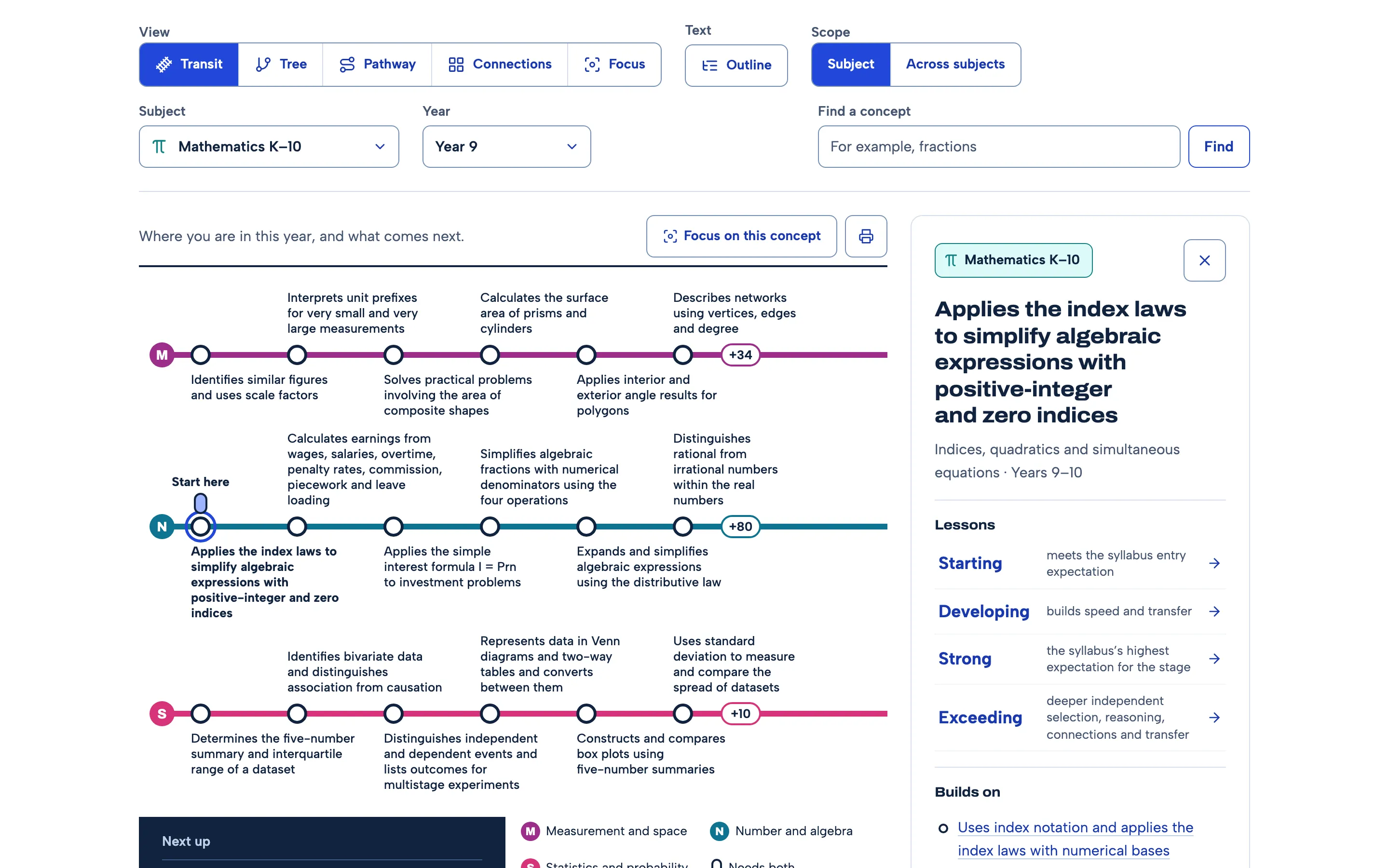
The Learning Map is the spine of your learning. Follow this example to see how to read it, then try the map above.

Example: Year 9 Mathematics · Transit view

Explore the Learning MapExample view

Choose a view above, or read the steps below.

Choose where to begin.

Choose a subject and year, or search for a concept. The map shows the ideas in that part of your learning.

Read the dots and lines.

Each dot is a concept. Coloured lines group related ideas into strands. Select a dot to open its details.

Follow the learning.

See what an idea builds on and where it leads. When lessons are available, choose a level to continue learning.

Try the map ↑

Lessons in English K–10, Year 9

Open a lesson to see its parts and levels. Select Study this concept to continue with a learning subscription.

English K–10 · Year 9

27 lessons in this selection

Reading, viewing and listening to textsReading and viewing

Choose a lesson to see its structure.

Rereads and reinterprets to analyse layers of meaningStructure
  1. Introduction
  2. Prerequisite review
  3. The idea
  4. Worked examples
  5. Practice set
  6. Common errors
  7. Extension
  • StartingLearning subscription
  • DevelopingLearning subscription
  • StrongLearning subscription
  • ExceedingLearning subscription
Study this concept
Justifies a personal response by analysing how the text positions the readerStructure
  1. Introduction
  2. Prerequisite review
  3. The idea
  4. Worked examples
  5. Practice set
  6. Common errors
  7. Extension
  • StartingLearning subscription
  • DevelopingLearning subscription
  • StrongLearning subscription
  • ExceedingLearning subscription
Study this concept
Evaluates own reading strategies and the value of readingStructure
  1. Introduction
  2. Prerequisite review
  3. The idea
  4. Worked examples
  5. Practice set
  6. Common errors
  7. Extension
  • StartingLearning subscription
  • DevelopingLearning subscription
  • StrongLearning subscription
  • ExceedingLearning subscription
Study this concept
Reads complex texts strategicallyStructure
  1. Introduction
  2. Prerequisite review
  3. The idea
  4. Worked examples
  5. Practice set
  6. Common errors
  7. Extension
  • StartingLearning subscription
  • DevelopingLearning subscription
  • StrongLearning subscription
  • ExceedingLearning subscription
Study this concept
Analyses the main ideas and thematic concerns of a textStructure
  1. Introduction
  2. Prerequisite review
  3. The idea
  4. Worked examples
  5. Practice set
  6. Common errors
  7. Extension
  • StartingLearning subscription
  • DevelopingLearning subscription
  • StrongLearning subscription
  • ExceedingLearning subscription
Study this concept
Sustains varied reading and responds at lengthStructure
  1. Introduction
  2. Prerequisite review
  3. The idea
  4. Worked examples
  5. Practice set
  6. Common errors
  7. Extension
  • StartingLearning subscription
  • DevelopingLearning subscription
  • StrongLearning subscription
  • ExceedingLearning subscription
Study this concept
Link to this topic
Understanding and responding to texts AReading and viewing

Choose a lesson to see its structure.

Analyses complex characters and their structural rolesStructure
  1. Introduction
  2. Prerequisite review
  3. The idea
  4. Worked examples
  5. Practice set
  6. Common errors
  7. Extension
  • StartingLearning subscription
  • DevelopingLearning subscription
  • StrongLearning subscription
  • ExceedingLearning subscription
Study this concept
Analyses figurative language within larger patterns of meaningStructure
  1. Introduction
  2. Prerequisite review
  3. The idea
  4. Worked examples
  5. Practice set
  6. Common errors
  7. Extension
  • StartingLearning subscription
  • DevelopingLearning subscription
  • StrongLearning subscription
  • ExceedingLearning subscription
Study this concept
Examines focalisation, reliability and authorial voiceStructure
  1. Introduction
  2. Prerequisite review
  3. The idea
  4. Worked examples
  5. Practice set
  6. Common errors
  7. Extension
  • StartingLearning subscription
  • DevelopingLearning subscription
  • StrongLearning subscription
  • ExceedingLearning subscription
Study this concept
Analyses narrative conventions across genres, modes and contextsStructure
  1. Introduction
  2. Prerequisite review
  3. The idea
  4. Worked examples
  5. Practice set
  6. Common errors
  7. Extension
  • StartingLearning subscription
  • DevelopingLearning subscription
  • StrongLearning subscription
  • ExceedingLearning subscription
Study this concept
Analyses how representations are shaped and how texts use or subvert conventionsStructure
  1. Introduction
  2. Prerequisite review
  3. The idea
  4. Worked examples
  5. Practice set
  6. Common errors
  7. Extension
  • StartingLearning subscription
  • DevelopingLearning subscription
  • StrongLearning subscription
  • ExceedingLearning subscription
Study this concept
Link to this topic
Understanding and responding to texts BReading and viewing

Choose a lesson to see its structure.

Evaluates how arguments are constructed and evidencedStructure
  1. Introduction
  2. Prerequisite review
  3. The idea
  4. Worked examples
  5. Practice set
  6. Common errors
  7. Extension
  • StartingLearning subscription
  • DevelopingLearning subscription
  • StrongLearning subscription
  • ExceedingLearning subscription
Study this concept
Analyses voice and how the authority of a text is negotiatedStructure
  1. Introduction
  2. Prerequisite review
  3. The idea
  4. Worked examples
  5. Practice set
  6. Common errors
  7. Extension
  • StartingLearning subscription
  • DevelopingLearning subscription
  • StrongLearning subscription
  • ExceedingLearning subscription
Study this concept
Analyses how context shapes texts, readers and languageStructure
  1. Introduction
  2. Prerequisite review
  3. The idea
  4. Worked examples
  5. Practice set
  6. Common errors
  7. Extension
  • StartingLearning subscription
  • DevelopingLearning subscription
  • StrongLearning subscription
  • ExceedingLearning subscription
Study this concept
Evaluates how texts position audiences and how they can be readStructure
  1. Introduction
  2. Prerequisite review
  3. The idea
  4. Worked examples
  5. Practice set
  6. Common errors
  7. Extension
  • StartingLearning subscription
  • DevelopingLearning subscription
  • StrongLearning subscription
  • ExceedingLearning subscription
Study this concept
Analyses style, from personal signature to literary movementStructure
  1. Introduction
  2. Prerequisite review
  3. The idea
  4. Worked examples
  5. Practice set
  6. Common errors
  7. Extension
  • StartingLearning subscription
  • DevelopingLearning subscription
  • StrongLearning subscription
  • ExceedingLearning subscription
Study this concept
Analyses how themes hold a text togetherStructure
  1. Introduction
  2. Prerequisite review
  3. The idea
  4. Worked examples
  5. Practice set
  6. Common errors
  7. Extension
  • StartingLearning subscription
  • DevelopingLearning subscription
  • StrongLearning subscription
  • ExceedingLearning subscription
Study this concept
Link to this topic
Understanding and responding to texts CReading and viewing

Choose a lesson to see its structure.

Analyses how genre shapes values and how genres evolveStructure
  1. Introduction
  2. Prerequisite review
  3. The idea
  4. Worked examples
  5. Practice set
  6. Common errors
  7. Extension
  • StartingLearning subscription
  • DevelopingLearning subscription
  • StrongLearning subscription
  • ExceedingLearning subscription
Study this concept
Analyses adaptation, appropriation and connections between textsStructure
  1. Introduction
  2. Prerequisite review
  3. The idea
  4. Worked examples
  5. Practice set
  6. Common errors
  7. Extension
  • StartingLearning subscription
  • DevelopingLearning subscription
  • StrongLearning subscription
  • ExceedingLearning subscription
Study this concept
Evaluates how audiences negotiate the value of a textStructure
  1. Introduction
  2. Prerequisite review
  3. The idea
  4. Worked examples
  5. Practice set
  6. Common errors
  7. Extension
  • StartingLearning subscription
  • DevelopingLearning subscription
  • StrongLearning subscription
  • ExceedingLearning subscription
Study this concept
Link to this topic
Imaginative, discursive and poetic compositionWriting and representing

Choose a lesson to see its structure.

Shapes complex complications and crafts authentic characters to depict ideasStructure
  1. Introduction
  2. Prerequisite review
  3. The idea
  4. Worked examples
  5. Practice set
  6. Common errors
  7. Extension
  • StartingLearning subscription
  • DevelopingLearning subscription
  • StrongLearning subscription
  • ExceedingLearning subscription
Study this concept
Creates engaging and authentic temporal and spatial settingsStructure
  1. Introduction
  2. Prerequisite review
  3. The idea
  4. Worked examples
  5. Practice set
  6. Common errors
  7. Extension
  • StartingLearning subscription
  • DevelopingLearning subscription
  • StrongLearning subscription
  • ExceedingLearning subscription
Study this concept
Link to this topic
Polished writingWriting and representing

Choose a lesson to see its structure.

Expresses ideas in structures that reflect an emerging personal styleStructure
  1. Introduction
  2. Prerequisite review
  3. The idea
  4. Worked examples
  5. Practice set
  6. Common errors
  7. Extension
  • StartingLearning subscription
  • DevelopingLearning subscription
  • StrongLearning subscription
  • ExceedingLearning subscription
Study this concept
Develops a personal and informed voice and experiments with tone, atmosphere and moodStructure
  1. Introduction
  2. Prerequisite review
  3. The idea
  4. Worked examples
  5. Practice set
  6. Common errors
  7. Extension
  • StartingLearning subscription
  • DevelopingLearning subscription
  • StrongLearning subscription
  • ExceedingLearning subscription
Study this concept
Link to this topic
Representing and multimodal compositionWriting and representing

Choose a lesson to see its structure.

Composes visual and multimodal texts with aesthetic qualities that influence viewpointsStructure
  1. Introduction
  2. Prerequisite review
  3. The idea
  4. Worked examples
  5. Practice set
  6. Common errors
  7. Extension
  • StartingLearning subscription
  • DevelopingLearning subscription
  • StrongLearning subscription
  • ExceedingLearning subscription
Study this concept
Link to this topic
Word-level language and spellingWriting and representing

Choose a lesson to see its structure.

Makes vocabulary choices that enhance style and shape meaning through connotationStructure
  1. Introduction
  2. Prerequisite review
  3. The idea
  4. Worked examples
  5. Practice set
  6. Common errors
  7. Extension
  • StartingLearning subscription
  • DevelopingLearning subscription
  • StrongLearning subscription
  • ExceedingLearning subscription
Study this concept
Link to this topic
SpeakingSpeaking and listening

Choose a lesson to see its structure.

Crafts spoken, signed or communicated texts that convey complex ideas to specific audiencesStructure
  1. Introduction
  2. Prerequisite review
  3. The idea
  4. Worked examples
  5. Practice set
  6. Common errors
  7. Extension
  • StartingLearning subscription
  • DevelopingLearning subscription
  • StrongLearning subscription
  • ExceedingLearning subscription
Study this concept
Link to this topic
Curriculum details for English K–10

NSW school sequence.

Stage 5 in the NSW source sequence · Years 9–10.

The English K–10 collection follows its named source sequence. For New South Wales, read each concept beside your state or territory’s official curriculum.

In English K–10, some source stages span two years and share lessons; choose a topic within the selected year level and revisit its foundation explanations when needed.

All subjects

See all subjects