

See how knowledge connects.

Follow any subject from Foundation to Year 12, in your state or territory.

EdDots Learning Map

See how to read the map
Year levels

Each learning area is listed with its Year 11 and 12 subjects, such as Physics under Science. The subject buttons below change the subject too.

Subject ladder

How to read this map

Connect the dots in your learning.

The Learning Map is the spine of your learning. Follow this example to see how to read it, then try the map above.

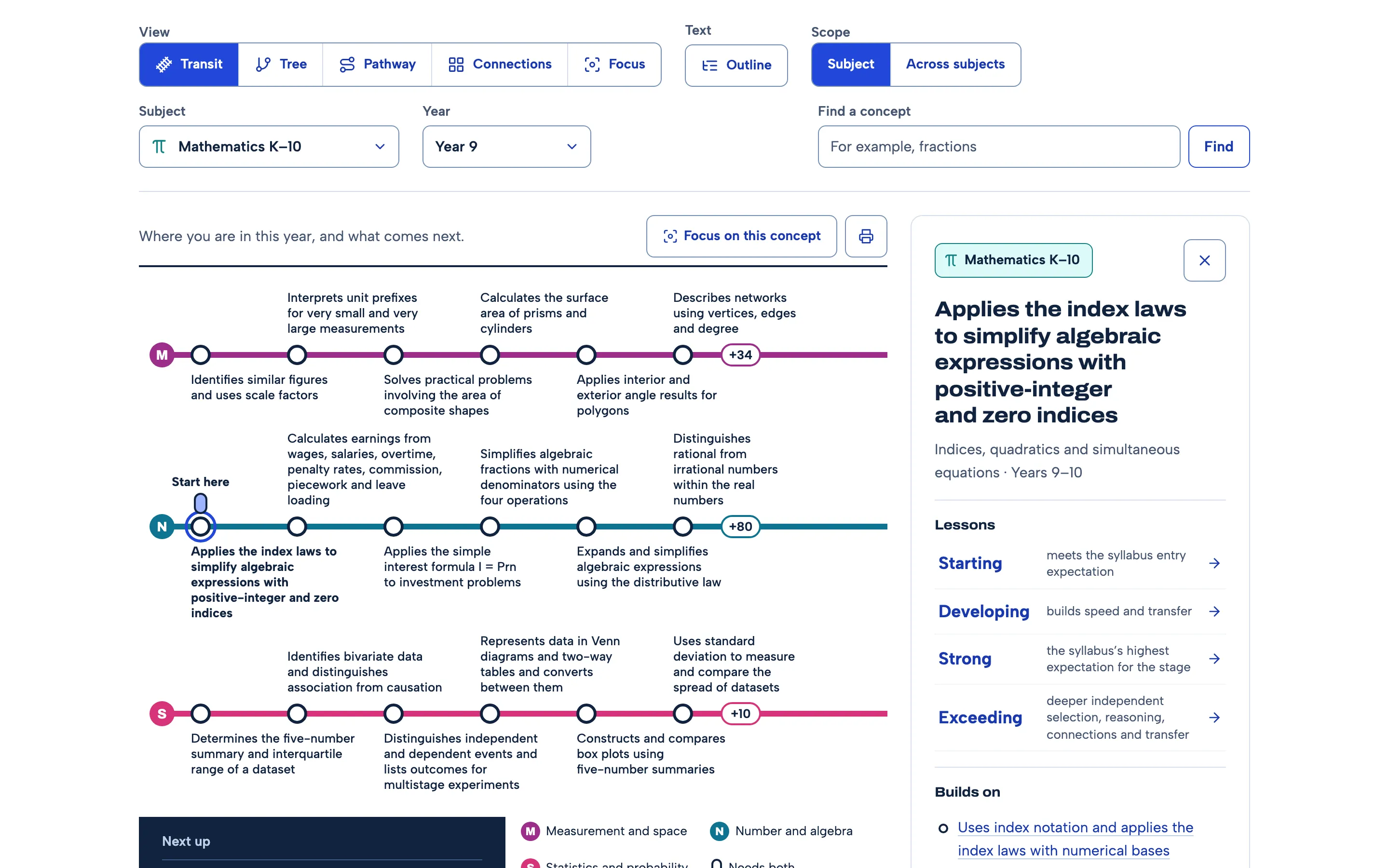
Example: Year 9 Mathematics · Transit view

Explore the Learning MapExample view

Choose a view above, or read the steps below.

Choose where to begin.

Choose a subject and year, or search for a concept. The map shows the ideas in that part of your learning.

Read the dots and lines.

Each dot is a concept. Coloured lines group related ideas into strands. Select a dot to open its details.

Follow the learning.

See what an idea builds on and where it leads. When lessons are available, choose a level to continue learning.

Try the map ↑

Lessons in English K–10, Year 7

Open a lesson to see its parts and levels. Select Study this concept to continue with a learning subscription.

English K–10 · Year 7

57 lessons in this selection

Reading, viewing and listening to textsReading and viewing

Choose a lesson to see its structure.

Re-reads closely to uncover main ideas and layers of meaningStructure
  1. Introduction
  2. Prerequisite review
  3. The idea
  4. Worked examples
  5. Practice set
  6. Common errors
  7. Extension
  • StartingLearning subscription
  • DevelopingLearning subscription
  • StrongLearning subscription
  • ExceedingLearning subscription
Study this concept
Explores how culture and time shape language in textsStructure
  1. Introduction
  2. Prerequisite review
  3. The idea
  4. Worked examples
  5. Practice set
  6. Common errors
  7. Extension
  • StartingLearning subscription
  • DevelopingLearning subscription
  • StrongLearning subscription
  • ExceedingLearning subscription
Study this concept
Explains a personal response and where it comes fromStructure
  1. Introduction
  2. Prerequisite review
  3. The idea
  4. Worked examples
  5. Practice set
  6. Common errors
  7. Extension
  • StartingLearning subscription
  • DevelopingLearning subscription
  • StrongLearning subscription
  • ExceedingLearning subscription
Study this concept
Reads strategically: pathways, context cues and reading aloudStructure
  1. Introduction
  2. Prerequisite review
  3. The idea
  4. Worked examples
  5. Practice set
  6. Common errors
  7. Extension
  • StartingLearning subscription
  • DevelopingLearning subscription
  • StrongLearning subscription
  • ExceedingLearning subscription
Study this concept
Reflects on what reading has taught youStructure
  1. Introduction
  2. Prerequisite review
  3. The idea
  4. Worked examples
  5. Practice set
  6. Common errors
  7. Extension
  • StartingLearning subscription
  • DevelopingLearning subscription
  • StrongLearning subscription
  • ExceedingLearning subscription
Study this concept
Sustains wide reading across diverse perspectivesStructure
  1. Introduction
  2. Prerequisite review
  3. The idea
  4. Worked examples
  5. Practice set
  6. Common errors
  7. Extension
  • StartingLearning subscription
  • DevelopingLearning subscription
  • StrongLearning subscription
  • ExceedingLearning subscription
Study this concept
Link to this topic
Understanding and responding to texts AReading and viewing

Choose a lesson to see its structure.

Analyses how characters are constructed and what they representStructure
  1. Introduction
  2. Prerequisite review
  3. The idea
  4. Worked examples
  5. Practice set
  6. Common errors
  7. Extension
  • StartingLearning subscription
  • DevelopingLearning subscription
  • StrongLearning subscription
  • ExceedingLearning subscription
Study this concept
Identifies imagery, simile, metaphor and personification and analyses their effectStructure
  1. Introduction
  2. Prerequisite review
  3. The idea
  4. Worked examples
  5. Practice set
  6. Common errors
  7. Extension
  • StartingLearning subscription
  • DevelopingLearning subscription
  • StrongLearning subscription
  • ExceedingLearning subscription
Study this concept
Analyses narrative conventions and the identities they depictStructure
  1. Introduction
  2. Prerequisite review
  3. The idea
  4. Worked examples
  5. Practice set
  6. Common errors
  7. Extension
  • StartingLearning subscription
  • DevelopingLearning subscription
  • StrongLearning subscription
  • ExceedingLearning subscription
Study this concept
Analyses narrative voice, focaliser and personStructure
  1. Introduction
  2. Prerequisite review
  3. The idea
  4. Worked examples
  5. Practice set
  6. Common errors
  7. Extension
  • StartingLearning subscription
  • DevelopingLearning subscription
  • StrongLearning subscription
  • ExceedingLearning subscription
Study this concept
Understands texts as acts of representation and describes them with metalanguageStructure
  1. Introduction
  2. Prerequisite review
  3. The idea
  4. Worked examples
  5. Practice set
  6. Common errors
  7. Extension
  • StartingLearning subscription
  • DevelopingLearning subscription
  • StrongLearning subscription
  • ExceedingLearning subscription
Study this concept
Analyses images, film and multimodal texts using their codes and conventionsStructure
  1. Introduction
  2. Prerequisite review
  3. The idea
  4. Worked examples
  5. Practice set
  6. Common errors
  7. Extension
  • StartingLearning subscription
  • DevelopingLearning subscription
  • StrongLearning subscription
  • ExceedingLearning subscription
Study this concept
Link to this topic
Understanding and responding to texts BReading and viewing

Choose a lesson to see its structure.

Analyses how arguments are constructed and evidencedStructure
  1. Introduction
  2. Prerequisite review
  3. The idea
  4. Worked examples
  5. Practice set
  6. Common errors
  7. Extension
  • StartingLearning subscription
  • DevelopingLearning subscription
  • StrongLearning subscription
  • ExceedingLearning subscription
Study this concept
Explains how cultural context shapes a text and its languageStructure
  1. Introduction
  2. Prerequisite review
  3. The idea
  4. Worked examples
  5. Practice set
  6. Common errors
  7. Extension
  • StartingLearning subscription
  • DevelopingLearning subscription
  • StrongLearning subscription
  • ExceedingLearning subscription
Study this concept
Explains how texts position readers to accept a point of viewStructure
  1. Introduction
  2. Prerequisite review
  3. The idea
  4. Worked examples
  5. Practice set
  6. Common errors
  7. Extension
  • StartingLearning subscription
  • DevelopingLearning subscription
  • StrongLearning subscription
  • ExceedingLearning subscription
Study this concept
Describes the stylistic and aesthetic qualities of a textStructure
  1. Introduction
  2. Prerequisite review
  3. The idea
  4. Worked examples
  5. Practice set
  6. Common errors
  7. Extension
  • StartingLearning subscription
  • DevelopingLearning subscription
  • StrongLearning subscription
  • ExceedingLearning subscription
Study this concept
Identifies themes and explains how they develop across a textStructure
  1. Introduction
  2. Prerequisite review
  3. The idea
  4. Worked examples
  5. Practice set
  6. Common errors
  7. Extension
  • StartingLearning subscription
  • DevelopingLearning subscription
  • StrongLearning subscription
  • ExceedingLearning subscription
Study this concept
Analyses personal voice and how a text builds authorityStructure
  1. Introduction
  2. Prerequisite review
  3. The idea
  4. Worked examples
  5. Practice set
  6. Common errors
  7. Extension
  • StartingLearning subscription
  • DevelopingLearning subscription
  • StrongLearning subscription
  • ExceedingLearning subscription
Study this concept
Link to this topic
Understanding and responding to texts CReading and viewing

Choose a lesson to see its structure.

Analyses genre conventions and how texts exhibit or challenge themStructure
  1. Introduction
  2. Prerequisite review
  3. The idea
  4. Worked examples
  5. Practice set
  6. Common errors
  7. Extension
  • StartingLearning subscription
  • DevelopingLearning subscription
  • StrongLearning subscription
  • ExceedingLearning subscription
Study this concept
Analyses connections between texts, including adaptations and appropriationsStructure
  1. Introduction
  2. Prerequisite review
  3. The idea
  4. Worked examples
  5. Practice set
  6. Common errors
  7. Extension
  • StartingLearning subscription
  • DevelopingLearning subscription
  • StrongLearning subscription
  • ExceedingLearning subscription
Study this concept
Explains why texts are valued differently in different contextsStructure
  1. Introduction
  2. Prerequisite review
  3. The idea
  4. Worked examples
  5. Practice set
  6. Common errors
  7. Extension
  • StartingLearning subscription
  • DevelopingLearning subscription
  • StrongLearning subscription
  • ExceedingLearning subscription
Study this concept
Link to this topic
Essay craft and composing written textsWriting and representing

Choose a lesson to see its structure.

Controls the structural and grammatical conventions of imaginative, informative and persuasive writingStructure
  1. Introduction
  2. Prerequisite review
  3. The idea
  4. Worked examples
  5. Practice set
  6. Common errors
  7. Extension
  • StartingLearning subscription
  • DevelopingLearning subscription
  • StrongLearning subscription
  • ExceedingLearning subscription
Study this concept
Discusses a central idea from personal and objective positionsStructure
  1. Introduction
  2. Prerequisite review
  3. The idea
  4. Worked examples
  5. Practice set
  6. Common errors
  7. Extension
  • StartingLearning subscription
  • DevelopingLearning subscription
  • StrongLearning subscription
  • ExceedingLearning subscription
Study this concept
Writes a structured analytical text with introduction, supporting points and conclusionStructure
  1. Introduction
  2. Prerequisite review
  3. The idea
  4. Worked examples
  5. Practice set
  6. Common errors
  7. Extension
  • StartingLearning subscription
  • DevelopingLearning subscription
  • StrongLearning subscription
  • ExceedingLearning subscription
Study this concept
Supports arguments with subjective and objective evidence, and refutes counterargumentsStructure
  1. Introduction
  2. Prerequisite review
  3. The idea
  4. Worked examples
  5. Practice set
  6. Common errors
  7. Extension
  • StartingLearning subscription
  • DevelopingLearning subscription
  • StrongLearning subscription
  • ExceedingLearning subscription
Study this concept
Uses imagery, figurative language and modality to create tone, atmosphere and moodStructure
  1. Introduction
  2. Prerequisite review
  3. The idea
  4. Worked examples
  5. Practice set
  6. Common errors
  7. Extension
  • StartingLearning subscription
  • DevelopingLearning subscription
  • StrongLearning subscription
  • ExceedingLearning subscription
Study this concept
Embeds textual evidence within sentences to support a personal perspectiveStructure
  1. Introduction
  2. Prerequisite review
  3. The idea
  4. Worked examples
  5. Practice set
  6. Common errors
  7. Extension
  • StartingLearning subscription
  • DevelopingLearning subscription
  • StrongLearning subscription
  • ExceedingLearning subscription
Study this concept
Composes persuasive texts with a defining thesis, elaboration paragraphs and a synthesising conclusionStructure
  1. Introduction
  2. Prerequisite review
  3. The idea
  4. Worked examples
  5. Practice set
  6. Common errors
  7. Extension
  • StartingLearning subscription
  • DevelopingLearning subscription
  • StrongLearning subscription
  • ExceedingLearning subscription
Study this concept
Uses rhetorical language to shape ideas and express a perspectiveStructure
  1. Introduction
  2. Prerequisite review
  3. The idea
  4. Worked examples
  5. Practice set
  6. Common errors
  7. Extension
  • StartingLearning subscription
  • DevelopingLearning subscription
  • StrongLearning subscription
  • ExceedingLearning subscription
Study this concept
Structures and sequences texts cohesively and orients the reader in the openingStructure
  1. Introduction
  2. Prerequisite review
  3. The idea
  4. Worked examples
  5. Practice set
  6. Common errors
  7. Extension
  • StartingLearning subscription
  • DevelopingLearning subscription
  • StrongLearning subscription
  • ExceedingLearning subscription
Study this concept
Composes informative texts that summarise conceptual informationStructure
  1. Introduction
  2. Prerequisite review
  3. The idea
  4. Worked examples
  5. Practice set
  6. Common errors
  7. Extension
  • StartingLearning subscription
  • DevelopingLearning subscription
  • StrongLearning subscription
  • ExceedingLearning subscription
Study this concept
Link to this topic
Imaginative and poetic compositionWriting and representing

Choose a lesson to see its structure.

Experiments with unpredictable structural features to engage a readerStructure
  1. Introduction
  2. Prerequisite review
  3. The idea
  4. Worked examples
  5. Practice set
  6. Common errors
  7. Extension
  • StartingLearning subscription
  • DevelopingLearning subscription
  • StrongLearning subscription
  • ExceedingLearning subscription
Study this concept
Creates imaginative texts that drive plot, develop character and build place and atmosphereStructure
  1. Introduction
  2. Prerequisite review
  3. The idea
  4. Worked examples
  5. Practice set
  6. Common errors
  7. Extension
  • StartingLearning subscription
  • DevelopingLearning subscription
  • StrongLearning subscription
  • ExceedingLearning subscription
Study this concept
Selects poetic forms and features to express ideas and personal perspectivesStructure
  1. Introduction
  2. Prerequisite review
  3. The idea
  4. Worked examples
  5. Practice set
  6. Common errors
  7. Extension
  • StartingLearning subscription
  • DevelopingLearning subscription
  • StrongLearning subscription
  • ExceedingLearning subscription
Study this concept
Develops thematic elements around a central complication or conflictStructure
  1. Introduction
  2. Prerequisite review
  3. The idea
  4. Worked examples
  5. Practice set
  6. Common errors
  7. Extension
  • StartingLearning subscription
  • DevelopingLearning subscription
  • StrongLearning subscription
  • ExceedingLearning subscription
Study this concept
Reshapes aspects of texts to create new meaningStructure
  1. Introduction
  2. Prerequisite review
  3. The idea
  4. Worked examples
  5. Practice set
  6. Common errors
  7. Extension
  • StartingLearning subscription
  • DevelopingLearning subscription
  • StrongLearning subscription
  • ExceedingLearning subscription
Study this concept
Link to this topic
Representing and multimodal compositionWriting and representing

Choose a lesson to see its structure.

Composes visual and multimodal texts that create tone, atmosphere and moodStructure
  1. Introduction
  2. Prerequisite review
  3. The idea
  4. Worked examples
  5. Practice set
  6. Common errors
  7. Extension
  • StartingLearning subscription
  • DevelopingLearning subscription
  • StrongLearning subscription
  • ExceedingLearning subscription
Study this concept
Link to this topic
Sentence-level grammar and punctuationWriting and representing

Choose a lesson to see its structure.

Embeds adjectival clauses and positions adverbial phrases and clauses to clarify meaningStructure
  1. Introduction
  2. Prerequisite review
  3. The idea
  4. Worked examples
  5. Practice set
  6. Common errors
  7. Extension
  • StartingLearning subscription
  • DevelopingLearning subscription
  • StrongLearning subscription
  • ExceedingLearning subscription
Study this concept
Selects noun groups and verb forms to control clarity and express modalityStructure
  1. Introduction
  2. Prerequisite review
  3. The idea
  4. Worked examples
  5. Practice set
  6. Common errors
  7. Extension
  • StartingLearning subscription
  • DevelopingLearning subscription
  • StrongLearning subscription
  • ExceedingLearning subscription
Study this concept
Applies a wide range of punctuation to control clarity, pace and reader responseStructure
  1. Introduction
  2. Prerequisite review
  3. The idea
  4. Worked examples
  5. Practice set
  6. Common errors
  7. Extension
  • StartingLearning subscription
  • DevelopingLearning subscription
  • StrongLearning subscription
  • ExceedingLearning subscription
Study this concept
Applies punctuation conventions for quotations and citing sourcesStructure
  1. Introduction
  2. Prerequisite review
  3. The idea
  4. Worked examples
  5. Practice set
  6. Common errors
  7. Extension
  • StartingLearning subscription
  • DevelopingLearning subscription
  • StrongLearning subscription
  • ExceedingLearning subscription
Study this concept
Constructs varied sentence structures and controls the four sentence types for purposeStructure
  1. Introduction
  2. Prerequisite review
  3. The idea
  4. Worked examples
  5. Practice set
  6. Common errors
  7. Extension
  • StartingLearning subscription
  • DevelopingLearning subscription
  • StrongLearning subscription
  • ExceedingLearning subscription
Study this concept
Controls agreement, prepositions, articles, conjunctions, linking devices and pronouns for cohesionStructure
  1. Introduction
  2. Prerequisite review
  3. The idea
  4. Worked examples
  5. Practice set
  6. Common errors
  7. Extension
  • StartingLearning subscription
  • DevelopingLearning subscription
  • StrongLearning subscription
  • ExceedingLearning subscription
Study this concept
Controls active and passive voice and tense for particular purposesStructure
  1. Introduction
  2. Prerequisite review
  3. The idea
  4. Worked examples
  5. Practice set
  6. Common errors
  7. Extension
  • StartingLearning subscription
  • DevelopingLearning subscription
  • StrongLearning subscription
  • ExceedingLearning subscription
Study this concept
Link to this topic
Word-level language and spellingWriting and representing

Choose a lesson to see its structure.

Spells unfamiliar, complex and technical words using phonological, orthographic and morphological knowledgeStructure
  1. Introduction
  2. Prerequisite review
  3. The idea
  4. Worked examples
  5. Practice set
  6. Common errors
  7. Extension
  • StartingLearning subscription
  • DevelopingLearning subscription
  • StrongLearning subscription
  • ExceedingLearning subscription
Study this concept
Selects topic-specific vocabulary that contributes to the stylistic features of writingStructure
  1. Introduction
  2. Prerequisite review
  3. The idea
  4. Worked examples
  5. Practice set
  6. Common errors
  7. Extension
  • StartingLearning subscription
  • DevelopingLearning subscription
  • StrongLearning subscription
  • ExceedingLearning subscription
Study this concept
Link to this topic
Planning, monitoring, revising and reflectingWriting and representing

Choose a lesson to see its structure.

Produces co-constructed texts that represent different ideas and valuesStructure
  1. Introduction
  2. Prerequisite review
  3. The idea
  4. Worked examples
  5. Practice set
  6. Common errors
  7. Extension
  • StartingLearning subscription
  • DevelopingLearning subscription
  • StrongLearning subscription
  • ExceedingLearning subscription
Study this concept
Uses model texts to plan and to shape compositional choicesStructure
  1. Introduction
  2. Prerequisite review
  3. The idea
  4. Worked examples
  5. Practice set
  6. Common errors
  7. Extension
  • StartingLearning subscription
  • DevelopingLearning subscription
  • StrongLearning subscription
  • ExceedingLearning subscription
Study this concept
Monitors accuracy and responds to verbal and written feedbackStructure
  1. Introduction
  2. Prerequisite review
  3. The idea
  4. Worked examples
  5. Practice set
  6. Common errors
  7. Extension
  • StartingLearning subscription
  • DevelopingLearning subscription
  • StrongLearning subscription
  • ExceedingLearning subscription
Study this concept
Plans a logical sequence of arguments and sets goals at conceptual, text and paragraph levelStructure
  1. Introduction
  2. Prerequisite review
  3. The idea
  4. Worked examples
  5. Practice set
  6. Common errors
  7. Extension
  • StartingLearning subscription
  • DevelopingLearning subscription
  • StrongLearning subscription
  • ExceedingLearning subscription
Study this concept
Reflects on own composition using technical vocabularyStructure
  1. Introduction
  2. Prerequisite review
  3. The idea
  4. Worked examples
  5. Practice set
  6. Common errors
  7. Extension
  • StartingLearning subscription
  • DevelopingLearning subscription
  • StrongLearning subscription
  • ExceedingLearning subscription
Study this concept
Integrates information and perspectives from different sources into informed textsStructure
  1. Introduction
  2. Prerequisite review
  3. The idea
  4. Worked examples
  5. Practice set
  6. Common errors
  7. Extension
  • StartingLearning subscription
  • DevelopingLearning subscription
  • StrongLearning subscription
  • ExceedingLearning subscription
Study this concept
Develops a coherent thesis for extended analytical and persuasive textsStructure
  1. Introduction
  2. Prerequisite review
  3. The idea
  4. Worked examples
  5. Practice set
  6. Common errors
  7. Extension
  • StartingLearning subscription
  • DevelopingLearning subscription
  • StrongLearning subscription
  • ExceedingLearning subscription
Study this concept
Link to this topic
SpeakingSpeaking and listening

Choose a lesson to see its structure.

Creates spoken, signed or communicated texts that convey ideas and viewpoints to an audienceStructure
  1. Introduction
  2. Prerequisite review
  3. The idea
  4. Worked examples
  5. Practice set
  6. Common errors
  7. Extension
  • StartingLearning subscription
  • DevelopingLearning subscription
  • StrongLearning subscription
  • ExceedingLearning subscription
Study this concept
Participates in informal, speculative and exploratory discussion about texts and ideasStructure
  1. Introduction
  2. Prerequisite review
  3. The idea
  4. Worked examples
  5. Practice set
  6. Common errors
  7. Extension
  • StartingLearning subscription
  • DevelopingLearning subscription
  • StrongLearning subscription
  • ExceedingLearning subscription
Study this concept
Uses rhetorical strategies to engage an audience and evoke an emotional responseStructure
  1. Introduction
  2. Prerequisite review
  3. The idea
  4. Worked examples
  5. Practice set
  6. Common errors
  7. Extension
  • StartingLearning subscription
  • DevelopingLearning subscription
  • StrongLearning subscription
  • ExceedingLearning subscription
Study this concept
Delivers a spoken text with control of intonation, emphasis, volume, pace and timingStructure
  1. Introduction
  2. Prerequisite review
  3. The idea
  4. Worked examples
  5. Practice set
  6. Common errors
  7. Extension
  • StartingLearning subscription
  • DevelopingLearning subscription
  • StrongLearning subscription
  • ExceedingLearning subscription
Study this concept
Link to this topic
Curriculum details for English K–10

NSW school sequence.

Stage 4 in the NSW source sequence · Years 7–8.

The English K–10 collection follows its named source sequence. For New South Wales, read each concept beside your state or territory’s official curriculum.

In English K–10, some source stages span two years and share lessons; choose a topic within the selected year level and revisit its foundation explanations when needed.

All subjects

See all subjects