

See how knowledge connects.

Follow any subject from Foundation to Year 12, in your state or territory.

EdDots Learning Map

See how to read the map
Year levels

Each learning area is listed with its Year 11 and 12 subjects, such as Physics under Science. The subject buttons below change the subject too.

Subject ladder

How to read this map

Connect the dots in your learning.

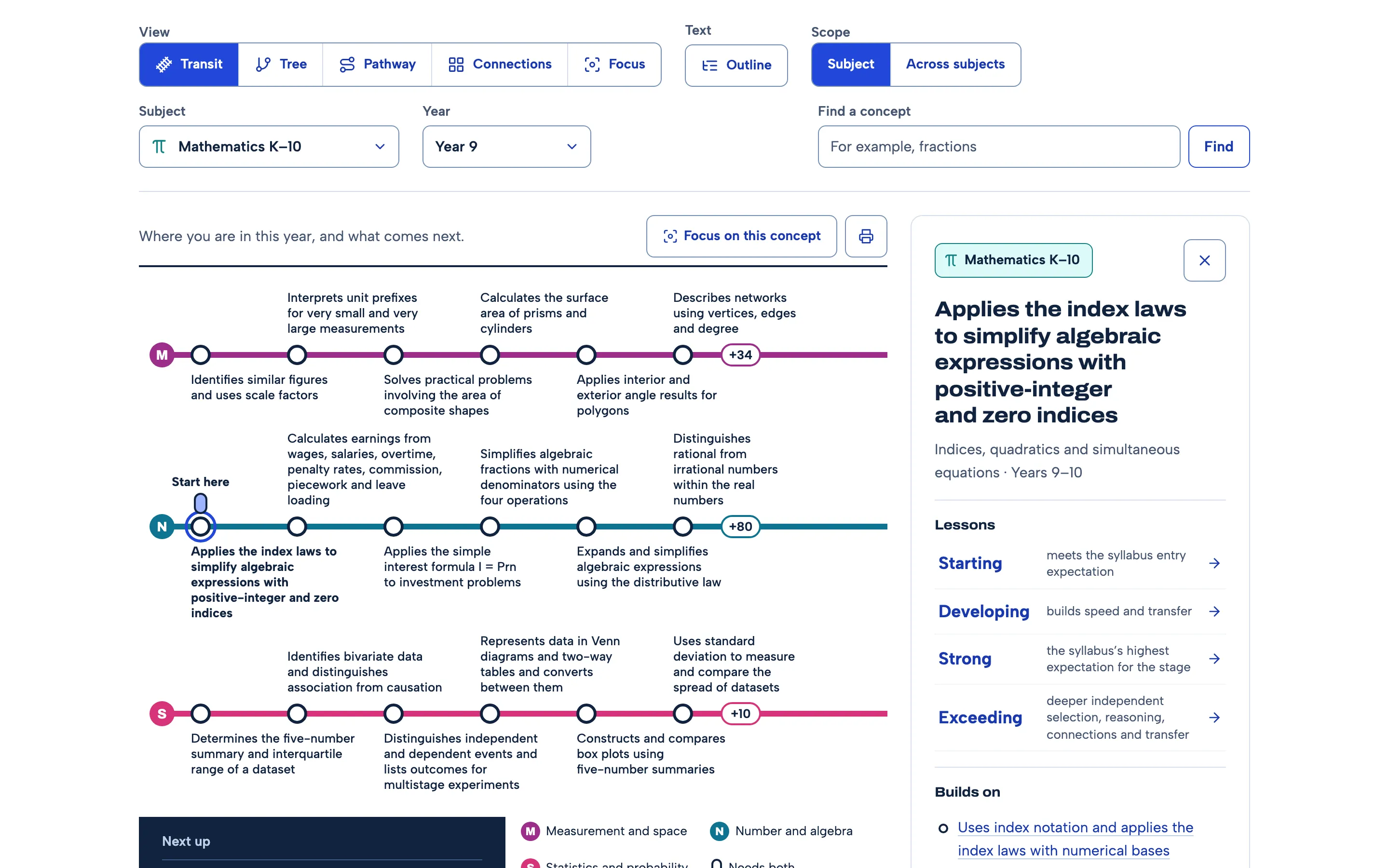
The Learning Map is the spine of your learning. Follow this example to see how to read it, then try the map above.

Example: Year 9 Mathematics · Transit view

Explore the Learning MapExample view

Choose a view above, or read the steps below.

Choose where to begin.

Choose a subject and year, or search for a concept. The map shows the ideas in that part of your learning.

Read the dots and lines.

Each dot is a concept. Coloured lines group related ideas into strands. Select a dot to open its details.

Follow the learning.

See what an idea builds on and where it leads. When lessons are available, choose a level to continue learning.

Try the map ↑

Lessons in English K–10, Year 3

Open a lesson to see its parts and levels. Select View example to try one level. Complete lessons need a learning subscription.

English K–10 · Year 3

71 lessons in this selection

Reading comprehensionReading and viewing

Choose a lesson to see its structure.

Reads dialogue, quoted speech and reported speechStructure
  1. Introduction
  2. Prerequisite review
  3. The idea
  4. Worked examples
  5. Practice set
  6. Common errors
  7. Extension
  • StartingLearning subscription
  • DevelopingLearning subscription
  • StrongLearning subscription
  • ExceedingLearning subscription
Study this concept
Infers meaning by linking clues across a textStructure
  1. Introduction
  2. Prerequisite review
  3. The idea
  4. Worked examples
  5. Practice set
  6. Common errors
  7. Extension
  • StartingLearning subscription
  • DevelopingLearning subscription
  • StrongLearning subscription
  • ExceedingLearning subscription
Study this concept
Identifies the main idea and supporting detailsStructure
  1. Introduction
  2. Prerequisite review
  3. The idea
  4. Worked examples
  5. Practice set
  6. Common errors
  7. Extension
  • StartingLearning subscription
  • DevelopingLearning subscription
  • StrongLearning subscription
  • ExceedingLearning subscription
Study this concept
Notices and repairs breakdowns in comprehensionStructure
  1. Introduction
  2. Prerequisite review
  3. The idea
  4. Worked examples
  5. Practice set
  6. Common errors
  7. Extension
  • StartingLearning subscription
  • DevelopingLearning subscription
  • StrongLearning subscription
  • ExceedingLearning subscription
Study this concept
Reads widely for different purposes and connects textsStructure
  1. Introduction
  2. Prerequisite review
  3. The idea
  4. Worked examples
  5. Practice set
  6. Common errors
  7. Extension
  • StartingLearning subscription
  • DevelopingLearning subscription
  • StrongLearning subscription
  • ExceedingLearning subscription
Study this concept
Builds topic knowledge and locates information in a textStructure
  1. Introduction
  2. Prerequisite review
  3. The idea
  4. Worked examples
  5. Practice set
  6. Common errors
  7. Extension
  • StartingLearning subscription
  • DevelopingLearning subscription
  • StrongLearning subscription
  • ExceedingLearning subscription
Study this concept
Identifies how structure, features and design achieve a text's purposeStructure
  1. Introduction
  2. Prerequisite review
  3. The idea
  4. Worked examples
  5. Practice set
  6. Common errors
  7. Extension
  • StartingLearning subscription
  • DevelopingLearning subscription
  • StrongLearning subscription
  • ExceedingLearning subscription
Study this concept
Explains how word choices shape a text's meaningStructure
  1. Introduction
  2. Prerequisite review
  3. The idea
  4. Worked examples
  5. Practice set
  6. Common errors
  7. Extension
  • StartingLearning subscription
  • DevelopingLearning subscription
  • StrongLearning subscription
  • ExceedingLearning subscription
Study this concept
Uses morphemes and new information to build meaning while readingStructure
  1. Introduction
  2. Prerequisite review
  3. The idea
  4. Worked examples
  5. Practice set
  6. Common errors
  7. Extension
  • StartingLearning subscription
  • DevelopingLearning subscription
  • StrongLearning subscription
  • ExceedingLearning subscription
Study this concept
Link to this topic
Reading fluencyReading and viewing

Choose a lesson to see its structure.

Reflects on and sets goals for own reading fluencyStructure
  1. Introduction
  2. Prerequisite review
  3. The idea
  4. Worked examples
  5. Practice set
  6. Common errors
  7. Extension
  • StartingLearning subscription
  • DevelopingLearning subscription
  • StrongLearning subscription
  • ExceedingLearning subscription
Study this concept
Reads aloud with expression, tone and punctuationStructure
  1. Introduction
  2. Prerequisite review
  3. The idea
  4. Worked examples
  5. Practice set
  6. Common errors
  7. Extension
  • StartingLearning subscription
  • DevelopingLearning subscription
  • StrongLearning subscription
  • ExceedingLearning subscription
Study this concept
Reads multisyllabic words and whole texts at a suitable rateStructure
  1. Introduction
  2. Prerequisite review
  3. The idea
  4. Worked examples
  5. Practice set
  6. Common errors
  7. Extension
  • StartingLearning subscription
  • DevelopingLearning subscription
  • StrongLearning subscription
  • ExceedingLearning subscription
Study this concept
Sustains reading of extended print and digital textsStructure
  1. Introduction
  2. Prerequisite review
  3. The idea
  4. Worked examples
  5. Practice set
  6. Common errors
  7. Extension
  • StartingLearning subscription
  • DevelopingLearning subscription
  • StrongLearning subscription
  • ExceedingLearning subscription
Study this concept
Link to this topic
Understanding and responding to literatureReading and viewing

Choose a lesson to see its structure.

Recognises argument, authorship and authorityStructure
  1. Introduction
  2. Prerequisite review
  3. The idea
  4. Worked examples
  5. Practice set
  6. Common errors
  7. Extension
  • StartingLearning subscription
  • DevelopingLearning subscription
  • StrongLearning subscription
  • ExceedingLearning subscription
Study this concept
Describes how characters are built and why they matterStructure
  1. Introduction
  2. Prerequisite review
  3. The idea
  4. Worked examples
  5. Practice set
  6. Common errors
  7. Extension
  • StartingLearning subscription
  • DevelopingLearning subscription
  • StrongLearning subscription
  • ExceedingLearning subscription
Study this concept
Groups texts by genre and notices genre blendsStructure
  1. Introduction
  2. Prerequisite review
  3. The idea
  4. Worked examples
  5. Practice set
  6. Common errors
  7. Extension
  • StartingLearning subscription
  • DevelopingLearning subscription
  • StrongLearning subscription
  • ExceedingLearning subscription
Study this concept
Recognises imagery, symbol and figurative language in literatureStructure
  1. Introduction
  2. Prerequisite review
  3. The idea
  4. Worked examples
  5. Practice set
  6. Common errors
  7. Extension
  • StartingLearning subscription
  • DevelopingLearning subscription
  • StrongLearning subscription
  • ExceedingLearning subscription
Study this concept
Connects narratives to lived experience and cultural narrativesStructure
  1. Introduction
  2. Prerequisite review
  3. The idea
  4. Worked examples
  5. Practice set
  6. Common errors
  7. Extension
  • StartingLearning subscription
  • DevelopingLearning subscription
  • StrongLearning subscription
  • ExceedingLearning subscription
Study this concept
Describes how plot, character and setting work togetherStructure
  1. Introduction
  2. Prerequisite review
  3. The idea
  4. Worked examples
  5. Practice set
  6. Common errors
  7. Extension
  • StartingLearning subscription
  • DevelopingLearning subscription
  • StrongLearning subscription
  • ExceedingLearning subscription
Study this concept
Sees how perspective and context shape literatureStructure
  1. Introduction
  2. Prerequisite review
  3. The idea
  4. Worked examples
  5. Practice set
  6. Common errors
  7. Extension
  • StartingLearning subscription
  • DevelopingLearning subscription
  • StrongLearning subscription
  • ExceedingLearning subscription
Study this concept
Tells themes apart from topicsStructure
  1. Introduction
  2. Prerequisite review
  3. The idea
  4. Worked examples
  5. Practice set
  6. Common errors
  7. Extension
  • StartingLearning subscription
  • DevelopingLearning subscription
  • StrongLearning subscription
  • ExceedingLearning subscription
Study this concept
Link to this topic
VocabularyReading and viewing

Choose a lesson to see its structure.

Traces where words come fromStructure
  1. Introduction
  2. Prerequisite review
  3. The idea
  4. Worked examples
  5. Practice set
  6. Common errors
  7. Extension
  • StartingLearning subscription
  • DevelopingLearning subscription
  • StrongLearning subscription
  • ExceedingLearning subscription
Study this concept
Names figurative language and wordplayStructure
  1. Introduction
  2. Prerequisite review
  3. The idea
  4. Worked examples
  5. Practice set
  6. Common errors
  7. Extension
  • StartingLearning subscription
  • DevelopingLearning subscription
  • StrongLearning subscription
  • ExceedingLearning subscription
Study this concept
Uses synonyms, antonyms and a thesaurusStructure
  1. Introduction
  2. Prerequisite review
  3. The idea
  4. Worked examples
  5. Practice set
  6. Common errors
  7. Extension
  • StartingLearning subscription
  • DevelopingLearning subscription
  • StrongLearning subscription
  • ExceedingLearning subscription
Study this concept
Builds vocabulary using morphemes and word associationsStructure
  1. Introduction
  2. Prerequisite review
  3. The idea
  4. Worked examples
  5. Practice set
  6. Common errors
  7. Extension
  • StartingLearning subscription
  • DevelopingLearning subscription
  • StrongLearning subscription
  • ExceedingLearning subscription
Study this concept
Reads words that carry more than their dictionary meaningStructure
  1. Introduction
  2. Prerequisite review
  3. The idea
  4. Worked examples
  5. Practice set
  6. Common errors
  7. Extension
  • StartingLearning subscription
  • DevelopingLearning subscription
  • StrongLearning subscription
  • ExceedingLearning subscription
Study this concept
Link to this topic
Handwriting and digital transcriptionWriting and representing

Choose a lesson to see its structure.

Joins letters legibly and consistently to build handwriting fluencyStructure
  1. Introduction
  2. Prerequisite review
  3. The idea
  4. Worked examples
  5. Practice set
  6. Common errors
  7. Extension
  • StartingLearning subscription
  • DevelopingLearning subscription
  • StrongLearning subscription
  • ExceedingLearning subscription
Study this concept
Types accurately and uses software functions to draft, revise and illustrate textsStructure
  1. Introduction
  2. Prerequisite review
  3. The idea
  4. Worked examples
  5. Practice set
  6. Common errors
  7. Extension
  • StartingLearning subscription
  • DevelopingLearning subscription
  • StrongLearning subscription
  • ExceedingLearning subscription
Study this concept
Link to this topic
Paragraph craft and cohesionWriting and representing

Choose a lesson to see its structure.

Holds tense, referencing, agreement, articles and connectives steady across a textStructure
  1. Introduction
  2. Prerequisite review
  3. The idea
  4. Worked examples
  5. Practice set
  6. Common errors
  7. Extension
  • StartingView example
  • DevelopingLearning subscription
  • StrongLearning subscription
  • ExceedingLearning subscription
Study this concept
Proofreads, revises and edits written texts against criteria and feedbackStructure
  1. Introduction
  2. Prerequisite review
  3. The idea
  4. Worked examples
  5. Practice set
  6. Common errors
  7. Extension
  • StartingLearning subscription
  • DevelopingLearning subscription
  • StrongLearning subscription
  • ExceedingLearning subscription
Study this concept
Creates imagery and humour with simile, personification, idiom and punStructure
  1. Introduction
  2. Prerequisite review
  3. The idea
  4. Worked examples
  5. Practice set
  6. Common errors
  7. Extension
  • StartingLearning subscription
  • DevelopingLearning subscription
  • StrongLearning subscription
  • ExceedingLearning subscription
Study this concept
Selects multimodal features and digital tools that add meaningStructure
  1. Introduction
  2. Prerequisite review
  3. The idea
  4. Worked examples
  5. Practice set
  6. Common errors
  7. Extension
  • StartingLearning subscription
  • DevelopingLearning subscription
  • StrongLearning subscription
  • ExceedingLearning subscription
Study this concept
Plans a text by researching, summarising and drawing on experienceStructure
  1. Introduction
  2. Prerequisite review
  3. The idea
  4. Worked examples
  5. Practice set
  6. Common errors
  7. Extension
  • StartingLearning subscription
  • DevelopingLearning subscription
  • StrongLearning subscription
  • ExceedingLearning subscription
Study this concept
Link to this topic
Sentence-level grammar and punctuationWriting and representing

Choose a lesson to see its structure.

Adds information with adjectival clauses and adverbial phrasesStructure
  1. Introduction
  2. Prerequisite review
  3. The idea
  4. Worked examples
  5. Practice set
  6. Common errors
  7. Extension
  • StartingLearning subscription
  • DevelopingLearning subscription
  • StrongLearning subscription
  • ExceedingLearning subscription
Study this concept
Writes complex sentences with subordinating conjunctions and varies sentence lengthStructure
  1. Introduction
  2. Prerequisite review
  3. The idea
  4. Worked examples
  5. Practice set
  6. Common errors
  7. Extension
  • StartingLearning subscription
  • DevelopingLearning subscription
  • StrongLearning subscription
  • ExceedingLearning subscription
Study this concept
Uses capitals, commas, bullet points and apostrophes accuratelyStructure
  1. Introduction
  2. Prerequisite review
  3. The idea
  4. Worked examples
  5. Practice set
  6. Common errors
  7. Extension
  • StartingLearning subscription
  • DevelopingLearning subscription
  • StrongLearning subscription
  • ExceedingLearning subscription
Study this concept
Uses quoted and reported speech in own writingStructure
  1. Introduction
  2. Prerequisite review
  3. The idea
  4. Worked examples
  5. Practice set
  6. Common errors
  7. Extension
  • StartingLearning subscription
  • DevelopingLearning subscription
  • StrongLearning subscription
  • ExceedingLearning subscription
Study this concept
Uses declarative, imperative, exclamatory and interrogative sentences for purposeStructure
  1. Introduction
  2. Prerequisite review
  3. The idea
  4. Worked examples
  5. Practice set
  6. Common errors
  7. Extension
  • StartingLearning subscription
  • DevelopingLearning subscription
  • StrongLearning subscription
  • ExceedingLearning subscription
Study this concept
Selects precise verbs and verb groups and writes cause-and-effect statementsStructure
  1. Introduction
  2. Prerequisite review
  3. The idea
  4. Worked examples
  5. Practice set
  6. Common errors
  7. Extension
  • StartingLearning subscription
  • DevelopingLearning subscription
  • StrongLearning subscription
  • ExceedingLearning subscription
Study this concept
Chooses topic-specific vocabulary, adjectives and synonyms for precisionStructure
  1. Introduction
  2. Prerequisite review
  3. The idea
  4. Worked examples
  5. Practice set
  6. Common errors
  7. Extension
  • StartingLearning subscription
  • DevelopingLearning subscription
  • StrongLearning subscription
  • ExceedingLearning subscription
Study this concept
Uses word order, repetition and personal pronouns for rhetorical effectStructure
  1. Introduction
  2. Prerequisite review
  3. The idea
  4. Worked examples
  5. Practice set
  6. Common errors
  7. Extension
  • StartingLearning subscription
  • DevelopingLearning subscription
  • StrongLearning subscription
  • ExceedingLearning subscription
Study this concept
Link to this topic
SpellingWriting and representing

Choose a lesson to see its structure.

Spells irregular plurals and taught homophones correctly in own writingStructure
  1. Introduction
  2. Prerequisite review
  3. The idea
  4. Worked examples
  5. Practice set
  6. Common errors
  7. Extension
  • StartingLearning subscription
  • DevelopingLearning subscription
  • StrongLearning subscription
  • ExceedingLearning subscription
Study this concept
Adds inflected and derivational suffixes and prefixes to base wordsStructure
  1. Introduction
  2. Prerequisite review
  3. The idea
  4. Worked examples
  5. Practice set
  6. Common errors
  7. Extension
  • StartingLearning subscription
  • DevelopingLearning subscription
  • StrongLearning subscription
  • ExceedingLearning subscription
Study this concept
Applies position and etymology rules for graphemes and proofreads spellingStructure
  1. Introduction
  2. Prerequisite review
  3. The idea
  4. Worked examples
  5. Practice set
  6. Common errors
  7. Extension
  • StartingLearning subscription
  • DevelopingLearning subscription
  • StrongLearning subscription
  • ExceedingLearning subscription
Study this concept
Segments multisyllabic words and uses stress and the schwa when spellingStructure
  1. Introduction
  2. Prerequisite review
  3. The idea
  4. Worked examples
  5. Practice set
  6. Common errors
  7. Extension
  • StartingLearning subscription
  • DevelopingLearning subscription
  • StrongLearning subscription
  • ExceedingLearning subscription
Study this concept
Link to this topic
Writing for imaginative, informative and persuasive purposesWriting and representing

Choose a lesson to see its structure.

Writes and punctuates dialogue inside a narrativeStructure
  1. Introduction
  2. Prerequisite review
  3. The idea
  4. Worked examples
  5. Practice set
  6. Common errors
  7. Extension
  • StartingLearning subscription
  • DevelopingLearning subscription
  • StrongLearning subscription
  • ExceedingLearning subscription
Study this concept
Writes an information report with headings, topic sentences and a conclusionStructure
  1. Introduction
  2. Prerequisite review
  3. The idea
  4. Worked examples
  5. Practice set
  6. Common errors
  7. Extension
  • StartingLearning subscription
  • DevelopingLearning subscription
  • StrongLearning subscription
  • ExceedingLearning subscription
Study this concept
Uses modality to strengthen or soften an argumentStructure
  1. Introduction
  2. Prerequisite review
  3. The idea
  4. Worked examples
  5. Practice set
  6. Common errors
  7. Extension
  • StartingLearning subscription
  • DevelopingLearning subscription
  • StrongLearning subscription
  • ExceedingLearning subscription
Study this concept
Writes a narrative with an orientation, complication and resolutionStructure
  1. Introduction
  2. Prerequisite review
  3. The idea
  4. Worked examples
  5. Practice set
  6. Common errors
  7. Extension
  • StartingLearning subscription
  • DevelopingLearning subscription
  • StrongLearning subscription
  • ExceedingLearning subscription
Study this concept
Chooses first, second or third person narrative voice for effectStructure
  1. Introduction
  2. Prerequisite review
  3. The idea
  4. Worked examples
  5. Practice set
  6. Common errors
  7. Extension
  • StartingLearning subscription
  • DevelopingLearning subscription
  • StrongLearning subscription
  • ExceedingLearning subscription
Study this concept
Writes a persuasive text with a stated position, sequenced arguments and a conclusionStructure
  1. Introduction
  2. Prerequisite review
  3. The idea
  4. Worked examples
  5. Practice set
  6. Common errors
  7. Extension
  • StartingLearning subscription
  • DevelopingLearning subscription
  • StrongLearning subscription
  • ExceedingLearning subscription
Study this concept
Writes poems in stanzas, using punctuation innovatively for effectStructure
  1. Introduction
  2. Prerequisite review
  3. The idea
  4. Worked examples
  5. Practice set
  6. Common errors
  7. Extension
  • StartingLearning subscription
  • DevelopingLearning subscription
  • StrongLearning subscription
  • ExceedingLearning subscription
Study this concept
Writes procedures and explanations in ordered stepsStructure
  1. Introduction
  2. Prerequisite review
  3. The idea
  4. Worked examples
  5. Practice set
  6. Common errors
  7. Extension
  • StartingLearning subscription
  • DevelopingLearning subscription
  • StrongLearning subscription
  • ExceedingLearning subscription
Study this concept
Writes factual and historical accounts with an introduction, events and conclusionStructure
  1. Introduction
  2. Prerequisite review
  3. The idea
  4. Worked examples
  5. Practice set
  6. Common errors
  7. Extension
  • StartingLearning subscription
  • DevelopingLearning subscription
  • StrongLearning subscription
  • ExceedingLearning subscription
Study this concept
Link to this topic
InteractingSpeaking and listening

Choose a lesson to see its structure.

Identifies cultural practices and protocols Aboriginal and Torres Strait Islander Peoples use to interactStructure
  1. Introduction
  2. Prerequisite review
  3. The idea
  4. Worked examples
  5. Practice set
  6. Common errors
  7. Extension
  • StartingLearning subscription
  • DevelopingLearning subscription
  • StrongLearning subscription
  • ExceedingLearning subscription
Study this concept
Contributes ideas and builds on others' ideas in class discussionStructure
  1. Introduction
  2. Prerequisite review
  3. The idea
  4. Worked examples
  5. Practice set
  6. Common errors
  7. Extension
  • StartingLearning subscription
  • DevelopingLearning subscription
  • StrongLearning subscription
  • ExceedingLearning subscription
Study this concept
Poses and responds to open-ended questions about literatureStructure
  1. Introduction
  2. Prerequisite review
  3. The idea
  4. Worked examples
  5. Practice set
  6. Common errors
  7. Extension
  • StartingLearning subscription
  • DevelopingLearning subscription
  • StrongLearning subscription
  • ExceedingLearning subscription
Study this concept
Adjusts language for different social and learning contextsStructure
  1. Introduction
  2. Prerequisite review
  3. The idea
  4. Worked examples
  5. Practice set
  6. Common errors
  7. Extension
  • StartingLearning subscription
  • DevelopingLearning subscription
  • StrongLearning subscription
  • ExceedingLearning subscription
Study this concept
Follows agreed protocols and assigned roles for classroom interactions, in person and onlineStructure
  1. Introduction
  2. Prerequisite review
  3. The idea
  4. Worked examples
  5. Practice set
  6. Common errors
  7. Extension
  • StartingLearning subscription
  • DevelopingLearning subscription
  • StrongLearning subscription
  • ExceedingLearning subscription
Study this concept
Link to this topic
Listening for understandingSpeaking and listening

Choose a lesson to see its structure.

Listens actively, makes notes, paraphrases and asks follow-up questionsStructure
  1. Introduction
  2. Prerequisite review
  3. The idea
  4. Worked examples
  5. Practice set
  6. Common errors
  7. Extension
  • StartingLearning subscription
  • DevelopingLearning subscription
  • StrongLearning subscription
  • ExceedingLearning subscription
Study this concept
Identifies connective vocabulary that holds a spoken text togetherStructure
  1. Introduction
  2. Prerequisite review
  3. The idea
  4. Worked examples
  5. Practice set
  6. Common errors
  7. Extension
  • StartingLearning subscription
  • DevelopingLearning subscription
  • StrongLearning subscription
  • ExceedingLearning subscription
Study this concept
Identifies how tone, pace, pitch, volume, gesture and posture change meaningStructure
  1. Introduction
  2. Prerequisite review
  3. The idea
  4. Worked examples
  5. Practice set
  6. Common errors
  7. Extension
  • StartingLearning subscription
  • DevelopingLearning subscription
  • StrongLearning subscription
  • ExceedingLearning subscription
Study this concept
Understands that rhetorical questions are used for intentional effectStructure
  1. Introduction
  2. Prerequisite review
  3. The idea
  4. Worked examples
  5. Practice set
  6. Common errors
  7. Extension
  • StartingLearning subscription
  • DevelopingLearning subscription
  • StrongLearning subscription
  • ExceedingLearning subscription
Study this concept
Identifies the evidence a speaker gives for a point of viewStructure
  1. Introduction
  2. Prerequisite review
  3. The idea
  4. Worked examples
  5. Practice set
  6. Common errors
  7. Extension
  • StartingLearning subscription
  • DevelopingLearning subscription
  • StrongLearning subscription
  • ExceedingLearning subscription
Study this concept
Identifies language features in spoken texts such as idioms, puns and colloquialismsStructure
  1. Introduction
  2. Prerequisite review
  3. The idea
  4. Worked examples
  5. Practice set
  6. Common errors
  7. Extension
  • StartingLearning subscription
  • DevelopingLearning subscription
  • StrongLearning subscription
  • ExceedingLearning subscription
Study this concept
Link to this topic
PresentingSpeaking and listening

Choose a lesson to see its structure.

Includes multimodal features in a planned presentationStructure
  1. Introduction
  2. Prerequisite review
  3. The idea
  4. Worked examples
  5. Practice set
  6. Common errors
  7. Extension
  • StartingLearning subscription
  • DevelopingLearning subscription
  • StrongLearning subscription
  • ExceedingLearning subscription
Study this concept
Uses prepositional, adverbial and adjectival phrases to extend a planned presentationStructure
  1. Introduction
  2. Prerequisite review
  3. The idea
  4. Worked examples
  5. Practice set
  6. Common errors
  7. Extension
  • StartingLearning subscription
  • DevelopingLearning subscription
  • StrongLearning subscription
  • ExceedingLearning subscription
Study this concept
Plans and delivers a spoken presentation suited to purpose and audienceStructure
  1. Introduction
  2. Prerequisite review
  3. The idea
  4. Worked examples
  5. Practice set
  6. Common errors
  7. Extension
  • StartingLearning subscription
  • DevelopingLearning subscription
  • StrongLearning subscription
  • ExceedingLearning subscription
Study this concept
Adjusts volume, pace and intonation when presenting and recitingStructure
  1. Introduction
  2. Prerequisite review
  3. The idea
  4. Worked examples
  5. Practice set
  6. Common errors
  7. Extension
  • StartingLearning subscription
  • DevelopingLearning subscription
  • StrongLearning subscription
  • ExceedingLearning subscription
Study this concept
States a reasoned argument in a presentation about learning-area contentStructure
  1. Introduction
  2. Prerequisite review
  3. The idea
  4. Worked examples
  5. Practice set
  6. Common errors
  7. Extension
  • StartingLearning subscription
  • DevelopingLearning subscription
  • StrongLearning subscription
  • ExceedingLearning subscription
Study this concept
Reflects on and monitors own presentations against given criteriaStructure
  1. Introduction
  2. Prerequisite review
  3. The idea
  4. Worked examples
  5. Practice set
  6. Common errors
  7. Extension
  • StartingLearning subscription
  • DevelopingLearning subscription
  • StrongLearning subscription
  • ExceedingLearning subscription
Study this concept
Link to this topic
Curriculum details for English K–10

NSW school sequence.

Stage 2 in the NSW source sequence · Years 3–4.

The English K–10 collection follows its named source sequence. For New South Wales, read each concept beside your state or territory’s official curriculum.

In English K–10, some source stages span two years and share lessons; choose a topic within the selected year level and revisit its foundation explanations when needed.

All subjects

See all subjects